Tuesday, June 13, 2006

Superman As The Christ Figure?


I used to be a big fan of comics and superheroes, although for some reason, I've never been that fond of Superman. I don't know why - I guess perhaps back in the day I just didn't like any superhero who was that invincible. I mean, other superheroes had one, maybe two powers. Superman has many, many. And although some weaknesses in superheroes were downright stupid (The Green Lantern's power had no effect on the color yellow. Yellow? "Oh, no - here comes Lemon Scented Palmolive Man! I am foiled!"), Superman's weakness (Kryptonite) just didn't seem that great.

Anyway, I know a lot of people are looking forward to the new movie. I'm not, really. I still haven't seen the latest X-Men (perhaps I'll go see it this week). I don't know why they need to resurrect the franchise. Of course, if they do as good of a job resurrecting Superman as they did Batman (the last Batman movie was great), maybe I will go see it.

Well, I found this interesting article concerning an author of a book who compares the superhero Superman to Jesus. It is an interesting article, and I can definitely see some of the similarities. And I guess you can use Superman as a way to introduce people to Jesus, although the only places I see this working is perhaps the comic book or game store down the street. Well, I guess Paul's statement that he became a Jew to win the Jew, a Greek to win the Greek, etc. applies here. Maybe I need to dig myself again into superhero lore in order to win the comic book geek.

Friday, June 09, 2006

BFF (Best Friends Forever)


A little bit of movie actor trivia:

Everyone knows who Vince Vaughn is, right? I mean, he's been in a ton of movies, especially lately (Dodgeball, The Wedding Crashers, etc.) And now he's in a movie with his supposed girlfriend or something, Jennifer Aniston.

Vince Vaughn's best friend is also in this new movie, he's the guy whose picture is above. Vince and Peter became best friends after doing an After School Special on T.V. together back in 1990 or so.

You may not recognize his best friend now.

But I'm sure if I showed you a picture of Ralphie - the kid who wants the gun in the classic Christmas movie A Christmas Story - you would recognize him right away.

Pretty crazy, huh!

Sufjan Stevens: Busted!


Sensational title, huh!

You know I love the Sufjan - I have three of his CDs (not counting the three Christmas CDs he put out) and I listen to them a lot. My wife rolls her eyes everytime she comes into my office and I'm listening to him, she thinks his music is very weird and that I'm ready to join a commune or something after listening to a Sufjan CD.

I thought that this was an interesting interview with Sufjan by BustedHalo.com (hence the Busted title). Now that Sufjan Stevens has become "popular" or at least "critically acclaimed", I'm interested to see what his musings on his next CD will be about. Will he continue to wonder about faith and life in general while weaving stories about particular states? Or will he back off this time (as it seems he's wanting to do according to this interview)? Hopefully we'll find out soon.

And Now For Something Completely Different...

Okay, so I really haven't had much to say - been too busy to really think. Okay? So, I decided to do something different.

As a worship arts minister, you would think that worship music would be constantly flowing in my head and brain. Nope. There is music that I'm constantly thinking about, constantly singing in my head - but it isn't worship music. What is it?

Veggie Tales, of course.

My almost 3-year-old daughter loves Veggie Tales, and so we listen to the CDs in the car ALL THE TIME.

One of her favorites is the Silly Songs CD. It also comes in DVD format, and is a countdown of the top 10 silly songs that have been featured on Veggie Tales videos.

Here is how the top 10 came out:

10. Endangered Love
9. The Dance Of The Cucumber
8. Larry's High Silk Hat
7. The Water Buffalo Song
6. The Song Of The Cebu
5. The Yodeling Veterinarian Of The Alps
4. His Cheeseburger
3. Love My Lips
2. The Pirates Who Don't Do Anything
1. The Hairbrush Song

Well, in this amazing post, I'm going to do my own top 10 - actually top 11 - and why I ranked them this way. Most of you won't care. But for those of you who have kids who love Veggie Tales, you'll understand. Here's the countdown:

11. The Dance Of The Cucumber

I really despise this Veggie Tales song. Not because it's sung in Spanish or anything, but because Bob translates Larry's song while Larry is singing, which makes it very hard to follow and very, very annoying.

Best lyric: none

10. The Hairbrush Song

Yes, this song is loved the most by Veggie Tales fans. I don't like it. I don't think it's very good musically or lyrically. I think it's boring. This song also could be number ten because I have to sing it to my daughter every night before bed as well.

Best lyric: "Why do you need a hairbrush you don't have any hair?"

9. The Water Buffalo Song

This is the first Silly Song ever made, and you can tell. It's not very creative or exciting.

Best lyric: "I took my buffalo to a store, got his head stuck in the door, spilled some lima beans on the floor..."

8. Larry's High Silk Hat

Creative and original, taking a famous operatic song and making it into a Veggie Tales classic. I like it, but not better than the other seven in front of it.

Best lyric: "A great big squash just sat upon my hat!"

7. Endangered Love

A song above love for a manatee named Barbara who is in a soap opera and doesn't know French. Yes, it's strange. But I really like how Larry dances with his stuffed animal manatee. Good stuff.

Best lyric: "Please don't go. I must. Don't go. I must. Don't, don't. Must, must!"

6. The Song Of The Cebu

This one and number five probably get switched in my mind in ranking every day. I like the slide projector aspect of this Silly Song. I like the three cebu - the sick cebu, the sad cebu and the mute cebu. Very creative.

Best lyric: "Mute cebu is grunting and waving, mmmmmmmmmmmmmhhhhhhhhhmoo moo."

5. The Yodeling Veterinarian Of The Alps

The best titled Silly Song. This doesn't make the very top, though because the transition between the barbershop quartet and the other stuff is kind of weird.

Best lyric: "He's gone a little loopy, in case you haven't heard. Here's a bottle of penicillin for your sickly arctic bird..."

4. Love My Lips

The last four are very, very close for me. This one is great, but not as great as the top three.

Best lyric: "Ten days after I turned eight, got my lips stuck in a gate. My friends all laughed, and I just stood there until the fire department came and broke the lock off with a crowbar and I had to spend the next six weeks in lip rehab with a kid named Oscar who got stung by a bee right on the lip and we couldn't even talk to each other until the fifth week because both of our lips were so swollen and when Oscar could speak, he spoke in Polish, and I only know like three words in Polish, except now I know four because Oscar taught me the word for lip: Usta."

3. Do The Moo Shoo

You may have wondered why the original Silly Song countdown had ten and I have eleven. This is why: because in the Silly Song countdown DVD, the contraption of Silliness breaks down, so Pa Grape tells Mr. Lunt and Larry the Cucumber to make up a song to buy him some time to fix it. Larry can't think of anything, so Pa Grape throws him a Chinese takeout menu, and he and Mr. Lunt come up with a song by singing the different entries. It's pure genius.

Best lyric: the whole song. "Chicken! Kung Pau...CHICKEN! Mongolian...CHICKEN! Sweet n' Sour...CHICKEN! Cashew...CHICKEN! Do the Moo Shoo - Moo Shoo, moo shoo, moo moo moo moo shoo...(do the moo shoo) PORK! Mandarin...PORK! Barbeque...PORK! Sweet n' Sour...PORK! Spicy Shredded...PORK! Do the Tofu! Tofu Tofu to to to Tofu...STOP! Break a fortune cookie! Beware of grape with wooden mallet. Ain't that the truth."

2. His Cheeseburger

#1 and #2 are so close, so so close. His Cheeseburger was my favorite for a long time. And the fact that Chuck E. Cheese plays it almost made me make it number one. But not quite. This is the first Silly Song not sung by Larry, and Mr. Lunt shines through. It's a song about a gourd named Jimmy and his love for cheeseburgers. Deep, man. Deep.

Best lyric: "'Cause he loves you cheeseburger with all his heart, and there 'aint nothing that can tear you two apart. And if the world suddenly ran out of cheese, you would get down on your hands and knees, and if someone accidentally dropped some cheese in the dirt, he would wash it off for you, wash it off for you, clean that dirty cheese off just for YOU! You are his cheeseburger..."

1. The Pirates Who Don't Do Anything

Yes, the number one silly countdown song. I know Pa Grape would be happy, because he was rather sad that the song that he got featured in only made it to number two in the original countdown. What's great about this song is after Pa Grape and Mr. Lunt sing about the "pirat-y" things they have never done because they don't do anything, Larry goes off on the strangest list of things he hasn't done that aren't even related to pirat-y stuff. It's classic, and original. Great stuff.

Best lyric: "Well, I've never plucked a rooster, and I'm not too good at ping-pong, and I've never thrown my mashed potatoes up against the wall. And I've never kissed a chipmunk, and I've never gotten head lice. And I've never been to Boston in the fall..." then later: "Well, I've never licked a spark plug and I've never sniffed a stink bug and I've never painted daisies on a big red rubber ball. And I've never bathed in yogurt, and I don't look good in leggings...Pa Grape: "You just don't get it, do you?" And we've never been to Boston in the fall."

Just in case you're wondering, I didn't have to look up the lyrics. I know them all.

Thursday, June 01, 2006

You Think You Got Game?


Then take this U2 Quiz that deals with their spirituality in interviews, lyrics and more. I consider myself a U2 afficionado, and I got some right, but there were several that I was stumped on and actually surprised about. Especially the ones that involve Adam Clayton. I've always considered U2's bass member as someone who didn't consider himself a God-follower, but he is really just more private about his faith than the other ones.

Monday, May 22, 2006

The Story Of Menashe

In the book The Crooked Shall Be Made Straight, Israeli writer S.Y. Agnon tells the story of a simple, godly man named Menashe. He runs a grocery store that slowly goes broke because, being so generous a man, Menashe cannot bear to ask money from customers who cannot afford to pay. His ruthless competitors eventually run him our of business, and he has to resort to travelilng from town to town begging. The village rabbi takes pity on poor, decent Menashe and gives him a letter commending him as a good and honest man who is deserving of charity.

Menashe begs for over a year, eventually collecting enough to restart his business. On his last night on the road, before returning home to begin his life again, he lodges at an inn and happens upon a local con man. This man is as vile and contemptible as Menashe is good and upright. When he sees Menashe's letter of commendation from the rabbi, his eyes light up. "If I had a letter like that I would never have to work another day in my life," he glowers, and then offers Menashe a substantial amount of money to purchase the letter. Tempted by the opportunity to virtually double his money and knowing that he no longer needs the rabbi's letter, Menashe sells the document. Then, with more money than he's ever seen before, he decides to celebrate his good fortune. Perhaps motivated also by shame at having sold the honorable rabbi's letter, Menashe gets horribly drunk and in his stupor is robbed of everything he has, even his prayer shawl. With not enough money to get home, Menashe is reduced to begging again.

In the meantime, the liar and con man is set upon by robbers and murdered. His body is mutilated beyond recognition, so that when his corpse is found with Menashe's letter in the pocket, it is immediately assumed that it is in fact Menashe who has been murdered. His wife is notified of her husband's death. Some months later she remarries, and a year later she gives birth to a son just as the destitute Menashe drags himself home. He arrives in town just as his wife and her husband are celebrating the circumcision of their child.

Menashe, the decent man, is in a terrible dilemma. If he reveals his identity, he will effectively end his wife's new marriage by revealing it to be illegal. He will also brand her child as illegitimate, causing him to be an outcast in the Jewish community. Unable to destroy the lives of those he loves, he retreats to the cemetery outside the town. There he confides in the custodian by telling him his tale of woe. The custodian takes pity on this sad, godly man and keeps his secret and supplies him with food and shelter. When Menashe dies shortly after, the custodian has him buried in the very plot his wife had arranged when she thought him dead two years previously.

What does this story mean? It is a parable about losing one's name and finding it. When Menashe was a decent, kind man, his good name was his passport, as symbolized by the rabbi's letter. When he sold the letter, he was acting out of character by doing something for a quick dishonest buck. By selling the letter, he literally gave away his name. It was if the real Menashe ceased to exist. Only later, when he performs his immense act of self-sacrifice, does he receive his name and therefore his identity again. By being buried under his own gravestone, his name is restored. Menashe is alive again (ironically at the point of his death).

Our actions are a representation of our name, our integrity, our identity. When we abandon the high calling to live like Christ, we abandon our Christian identity. We are not saved by our own actions, but we are known by them. Jesus told his own disciples that they would be known (identified as followers of Jesus) by how much they loved each other. Their actions typified their name.

- From the book The Shaping Of Things To Come

Friday, May 19, 2006

Legos Just Got Cooler...


I've never been a big Lego fan, I didn't play with them much as a kid because I wasn't really that creative back then. However, I'm always amazed at the different uses for them. There are now three Legoland parks with lego creations, rides, etc.

However, I stumbled upon a site that made Legos even cooler. It's a website that illustrates Bible stories using Legos. How cool is that?

Tuesday, May 16, 2006

I'm So Proud...

of my wife Debby. If you know her, you know she has long hair. She's pretty much had long hair for all but a couple of years of her life.

A month ago, she heard that a girl who was battling cancer and who had lost all her hair was in need of a "hair donor" who would be willing to cut off ten inches of hair so that this girl could have a wig.

Today, she got the ten inches cut off. And she donated it to this little girl through the organization Locks Of Love. I'm proud of her, because I know her hair means a great deal to her. It's all about making the little (or big) differences in someone else's life. :)

Monday, May 15, 2006

Everyone's An Expert...

I have to admit that lately I've really needed a good laugh, so where else to find a good laugh but the internet? Today I laughed like crazy at this short video from BBC news. During one of their actual newscasts, the newswoman interviews a man who she believes to be an expert in the field of computer business and she asks him several questions about the legal battle between Apple Computers and the Beatles' Apple record label. The guy who she is interviewing was obviously brought in to do something else, as you can tell at the beginning of the clip - when he gets introduced, he becomes very nervous since he knows that he is in the wrong place at the wrong time. Classic. (There are two versions of this movie, I picked the one where BBC explains what's going on because it helps make sense of it).

Enjoy.

Friday, May 12, 2006

The Truth Must Dazzle Gradually

"Like lightning to the children eased
Through revelation kind
The truth must dazzle gradually
Or every man be blind."

- Emily Dickinson

I have submerged myself into what I am beginning to call "missional kingdom theology". Pretty much every book I'm reading right now (except for another quick reading of The Da Vinci Code, since we're doing a series on it soon) is focused on the idea of what it means to live as a missional-minded person who believes Jesus when he says "The Kingdom of God is within you." Books by Brian McLaren, N.T. Wright and others have smacked me across the head with some interesting new(old) ideas.

However, I'm beginning to feel "the bends" - I've submerged myself too quickly without allowing the pressure within me slowly acclimate to the pressure of my surroundings, in this case, missional kingdom thinking. I am now in the process of taking one book at a time, reading slowly, writing down my thoughts, and allowing God to work through these books in such a way that I will be ready to make appropriate changes to my life and ministry in due time.

The truth must dazzle gradually.

Tuesday, May 09, 2006

Brian McLaren on The Da Vinci Code Movie

I thought this was an interesting interview. I laughed out loud when McLaren says that the Da Vinci Code novel has caused possibly less harm to Christianity than the Left Behind novels. Here you go...

------

Brian McLaren on The Da Vinci Code
An interview by Lisa Ann Cockrel
With The Da Vinci Code poised to go from bestseller list to the big screen on May 19, pastor and writer (and Sojourners board member) Brian McLaren talks about why he thinks there's truth in the controversial book's fiction.


- What do you think the popularity of The Da Vinci Code reveals about pop culture attitudes toward Christianity and the church?

Brian McLaren: I think a lot of people have read the book, not just as a popular page-turner but also as an experience in shared frustration with status-quo, male-dominated, power-oriented, cover-up-prone organized Christian religion. We need to ask ourselves why the vision of Jesus hinted at in Dan Brown's book is more interesting, attractive, and intriguing to these people than the standard vision of Jesus they hear about in church. Why would so many people be disappointed to find that Brown's version of Jesus has been largely discredited as fanciful and inaccurate, leaving only the church's conventional version? Is it possible that, even though Brown's fictional version misleads in many ways, it at least serves to open up the possibility that the church's conventional version of Jesus may not do him justice?

- So you think The Da Vinci Code taps into dissatisfaction with Jesus as we know him?

McLaren: For all the flaws of Brown's book, I think what he's doing is suggesting that the dominant religious institutions have created their own caricature of Jesus. And I think people have a sense that that's true. It's my honest feeling that anyone trying to share their faith in America today has to realize that the Religious Right has polluted the air. The name "Jesus" and the word "Christianity" are associated with something judgmental, hostile, hypocritical, angry, negative, defensive, anti-homosexual, etc. Many of our churches, even though they feel they represent the truth, actually are upholding something that's distorted and false.

I also think that the whole issue of male domination is huge and that Brown's suggestion that the real Jesus was not as misogynist or anti-woman as the Christian religion often has been is very attractive. Brown's book is about exposing hypocrisy and cover-up in organized religion, and it is exposing organized religion's grasping for power. Again, there's something in that that people resonate with in the age of pedophilia scandals, televangelists, and religious political alliances. As a follower of Jesus I resonate with their concerns as well.


- Do you think the book contains any significantly detrimental distortions of the Christian faith?

McLaren: The book is fiction and it's filled with a lot of fiction about a lot of things that a lot of people have already debunked. But frankly, I don't think it has more harmful ideas in it than the Left Behind novels. And in a certain way, what the Left Behind novels do, the way they twist scripture toward a certain theological and political end, I think Brown is twisting scripture, just to other political ends. But at the end of the day, the difference is I don't think Brown really cares that much about theology. He just wanted to write a page-turner and he was very successful at that.

- Many Christians are also reading this book and it's rocking their preconceived notions - or lack of preconceived notions - about Christ's life and the early years of the church. So many people don't know how we got the canon, for example. Should this book be a clarion call to the church to say, "Hey, we need to have a body of believers who are much more literate in church history." Is that something the church needs to be thinking about more strategically?

McLaren: Yes! You're exactly right. One of the problems is that the average Christian in the average church who listens to the average Christian broadcasting has such an oversimplified understanding of both the Bible and of church history - it would be deeply disturbing for them to really learn about church history. I think the disturbing would do them good. But a lot of times education is disturbing for people. And so if The Da Vinci Code causes people to ask questions and Christians have to dig deeper, that's a great thing, a great opportunity for growth. And it does show a weakness in the church giving either no understanding of church history or a very stilted, one-sided, sugarcoated version.

On the other hand, it's important for me to say I don't think anyone can learn good church history from Brown. There's been a lot of debunking of what he calls facts. But again, the guy's writing fiction so nobody should be surprised about that. The sad thing is there's an awful lot of us who claim to be telling objective truth and we actually have our own propaganda and our own versions of history as well.

Let me mention one other thing about Brown's book that I think is appealing to people. The church goes through a pendulum swing at times from overemphasizing the deity of Christ to overemphasizing the humanity of Christ. So a book like Brown's that overemphasizes the humanity of Christ can be a mirror to us saying that we might be underemphasizing the humanity of Christ.


- In light of The Da Vinci Code movie that is soon to be released, how do you hope churches will engage this story?

McLaren: I would like to see churches teach their people how to have intelligent dialogue that doesn't degenerate into argument. We have to teach people that the Holy Spirit works in the middle of conversation. We see it time and time again - Jesus enters into dialogue with people; Paul and Peter and the apostles enter into dialogue with people. We tend to think that the Holy Spirit can only work in the middle of a monologue where we are doing the speaking.

So if our churches can encourage people to, if you see someone reading the book or you know someone who's gone to the movie, say, "What do you think about Jesus and what do you think about this or that," and to ask questions instead of getting into arguments, that would be wonderful. The more we can keep conversations open and going the more chances we give the Holy Spirit to work. But too often people want to get into an argument right away. And, you know, Jesus has handled 2,000 years of questions, skepticism, and attacks, and he's gonna come through just fine. So we don't have to be worried.

Ultimately, The Da Vinci Code is telling us important things about the image of Jesus that is being portrayed by the dominant Christian voices. [Readers] don't find that satisfactory, genuine, or authentic, so they're looking for something that seems more real and authentic.

Monday, May 08, 2006

World Fair Trade Day


This weekend is a special weekend for many people as they celebrate Mother's Day.

Now you have another reason to make it special.

May 13th is World Fair Trade Day. Fair Trade is something that is very important in our world today as more and more world-conscious people are realizing how unfair a lot of trade practices are and thus are turning to companies who treat poor laborers fairly by paying them what they are worth.

I would encourage everyone to figure out how they can help make trade fair in the world today. Learning what you can do is part of the figuring out.

Review of Hillsong United's new CD "United We Stand"

Thanks to Kyle, a guy on my worship team, I have just recently discovered this worship band - the youth band from Hillsong Church in Australia. I have done a few Hillsong songs, but I've been veering away from them recently because they just aren't the style that we're looking for in worship.

Hillsong United is, however. The first CD I heard was Look To You, and immediately I liked it. We have started to do the song "Salvation Is Here" recently and it's been a good song to introduce.

The latest Hillsong United CD is out and without further adieu, here's my review of it, song by song.

Song #1: An Introduction - 10/10

I love how this CD starts out - a minute and a half instrumental that reminds me of Coldplay or U2. It then blends right into song #2.

Song #2: The Time Has Come - 8/10

Again, reminds me of Coldplay's and U2's more upbeat songs. I really like this song - I like the different changes, and the bass player for Hillsong United kicks. Of course, so does the guitarist and the drummer and the...

Song #3: Take It All - 6/10

I think I will like this song better the more I listen to this CD, but to me it seems like a hard song to introduce into worship.

Song #4: From God Above - 7/10

One thing I like about Hillsong United is that their songs musically don't seem to be very formulaic, a problem I find in other worship artists (see Chris Tomlin). This is an interesting song, to say the least. I like it.

Song #5: From The Inside Out - 10/10

My favorite song on this CD, at least so far. I love the words, I love the melody, I love how they sing the "Everlasting your light will shine when all else fails" part as part of each verse, then towards the end it becomes part of the chorus. Brilliant. We are introducing this song this coming Sunday, and I'm excited.

Song #6: Came To The Rescue - 10/10

Song #5 and #6 pack a powerful wallop together. This is one that I'm going to suggest my female worship leaders introduce, I think they'll like it. I love the sound of the guitar on this song, it's killer.

Song #7: A Reprise - 10/10

The organ starts out this reprise, and it sounds great. Then that killer guitar from song #6 comes back. Then quietly the refrain from the last song comes through:

In my life, be lifted high
In my world, be lifted high
In my love, be lifted high

It builds and builds coming to an incredible crescendo with everyone singing and playing loud. I would love for our church to be as responsive as this.

Song #8: None But Jesus - 8/10

The first song on this CD sung by a female leader. It's a very soothing song, and I really like the lyrics. I also like what sounds like an e-bow in the background. I love e-bows. I need to get one of our electric guitarists to get excited about learning how to play one.

Song #9: Selah - 6/10

I like the sound, but it's rather bland.

Song #10: Fire Fall Down - 9/10

A long, long song (almost eleven minutes!) but it's incredible. The music reminds me of one of Delirious' slower songs off of Glo. Do I have to mention again how much I love the guitar work on this CD? This is the kind of stuff I would like to see us move to - we've been doing a little more experimentation like this (Invitation Fountain by The Violet Burning, throwing in some U2 riffs here and there, more dramatic pauses, etc.), but I want us to do more. Of course, this song builds as well into a full out audio arsenal.

Song #11: Revolution - 7/10

It's an interesting song, to say the least. I'm not fond of the chorus - either the lyrics or the melody, but I love the verses. Almost ska-like!

Song #12: Kingdom Come - 8/10

When the song first started, I really wanted to not like it, because it sounded similar to a couple other songs on this CD, notably the first one. But then the chorus hit, and I realized I really liked this song.

Song #13: No One Like You - 5/10

Too repetitive. But I know that on each CD they have a song with repetitive words, so maybe I'm just digging here.

Song #14: Sovereign Hands - 6/10

Sounds a little too much like the main Hillsongs stuff.

Song #15: The Stand - 7/10

This is a long CD. I think my judgment is getting cloudy because of how long this CD is. But this is a solid song.

Song #16: Selah - 7/10

Nice instrumental. Getting woozy.

Song #17: Hallelujah - 8/10

Great way to end this CD. Yes, it's repetitive, but it's better than Our God Reigns off of the new Passion CD. Interestingly, it also contains the words "Our God Reigns". Hmmm.

Well, that's it. A lot of songs, you definitely get your money worth. And I wholeheartedly recommend this CD. It is an incredible worship CD. And you get a DVD with it, which shows you when they did these songs live. Very passionate, very moving. I love it.

Friday, May 05, 2006

Boycotting Fiction

Zach has it so right when it comes to the latest boycotting movement by Christians. This time, let's have everyone boycott The Da Vinci Code.

That's right, folks. Let's boycott a fictional movie based on a fictional novel. The movie producers are probably freaking out right now - no, not over the boycott. They are probably excited about the amount of publicity that this dumb boycott will give the movie, which means more money for them and for the movie itself.

This reminds me of the huge boycott of The Last Temptation of Christ - a movie based on a fictional novel. The movie wasn't presenting their version of the gospel as truth. It was just a different idea (that perhaps took it a little too far).

Boycotting fiction. Another smart idea in the annals of Christendom.

Tuesday, May 02, 2006

Review of Passion's New CD "Everything Glorious"


Well, I've listened to it for awhile now, so I think I can make a pretty good review/analysis of this CD.

Song #1: Awesome Is The Lord Most High - 7/10

I think this song doesn't start off very well, and it's Tomlin, which means it's going to be too high for me to sing in the regular key - I always seem to have to change the key with Tomlin. But it's a solid song.

Song #2: Glorious - 7/10

Again, too high. But I really like the interraction between Tomlin and Christy Nockels on this song.

Song #3: Party - 0/10

This is now my least favorite Passion song. It's stupid. And this is an indicator of an annoying feature of this CD - worship leader starts the song, pauses for 30 seconds to work the crowd up, and then starts it up again (see later songs to see what I mean)

Song #4: Jesus Paid It All - 10/10

One thing I do love about Passion is that they do a great job of taking hymns and jazzing them up. This one was led by Kristian Stanfill, my favorite worship leader as of right now. I heard from a friend of mine that a couple of people from his church went to the Passion event, and when Kristian came up and started leading, they said to each other, "Who is this guy?" My response to that is "who the heck cares who it is? Was he not on your list of pre-approved worship leaders? Because his name isn't Chris, David, Charlie or Matt? Grrr."

Anyway, this is my favorite song on the CD.

Song #5: All We Need - 8/10

If you know me, you know my dislike for Charlie Hall's involvement with Passion. I just don't like his songs. His latest CD, Flying Into Daybreak, has left me pleasantly surprised, however, and I really like this song off of it. I took off two marks because of the annoying electronica that starts this song.

Song #6: Center - 7/10

Again - pleasantly surprised.

Song #7: We Are Yours - 5/10

Don't like the sound of this song.

Song #8: You Never Let Go - 7/10

Or as I like to call it, Blessed Be Your Name Part 2. But I like the idea. I think there should be more Lament type songs written, and Matt Redman has written two good ones.

Song #9: I Stand Amazed - 7/10

Another great reworking of a hymn. I like Tomlin's voice on this one. Again, too high.

Song #10: Everything Glorious - 5/10

I was disappointed in David Crowder most of all with this CD. I didn't like the ones off A Collision for the passion CD. He should have gone with Foreverandever, etc. and Wholly Yours in my opinion. This new one doesn't impress me at all.

Song #11: You Are My Joy - 5/10

Here we see the feature of starting the song, waiting 30 seconds, and starting it up again - again. What's the point? If it's to work the crowd into a frenzy, why don't you just drop live scorpions from the ceiling? It's a lot more effective, and you don't have to waste a song doing so.

Song #12: We Win - 3/10

Putting this song on a worship CD reminds me of the time when I took my student ministry to a conference. Actually, I think our worship band was the band for the conference. Anyway, the speaker closes out his message and says, "Let's pray. Dear Satan..." We were all a little perplexed at first, to say the least.

How does this relate? Because who is the song "We Win" directed to?

We've already won and you don't stand a chance...

It doesn't sound like a song directed to God, does it? David Crowder, what happened to you on this CD?

Song #13: Our God Reigns - 5/10

Disappointing ending, in my opinion. Let's sing the same thing for six and a half minutes! Yes! No.

Extra Song #1: Salvation Is Here - 9/10

This song was not included on the full-length CD but was offered on an early release EP from iTunes.

Again, Kristian Stanfill does a great job. This song is a Hillsongs United song, one of my favorites. I don't think it's as powerful as the original Hillsongs version, but it's still great. I don't know why this song didn't make the final cut, personally.

Extra Song #2: Made To Worship - 7/10

This was also offered on an early release EP from iTunes. I like it. Good song.

Monday, May 01, 2006

So Long Red Wings


Yes, I know that the Avs did not play the Wings in the playoffs this year, but this was the only appropriate picture I could find.

I'm not going to rub it in too much, Red Wings fans...

And I am sad to see Yzerman go.

But still - seeing that I had no expectations that my Avalanche were going to do anything this year, it's very weird that they're moving on and the Red Wings aren't.

Oh well, always next year. Cheers!

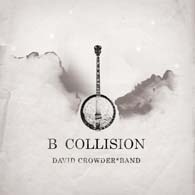
B Collision


I'm a huge David Crowder Band fan. I thoroughly enjoyed the latest CD called A Collision - although to be honest, I don't feel like a lot of the songs translate well in a congregational worship setting.

Which is why I was disappointed with the song selection of Crowder songs off the latest Passion CD. You Are My Joy is a good song - but I really didn't like the way it was done.

We Win seems like it's a song directed to the devil - "'cause we've already won and you don't have a chance" - yet it's on a worship CD.

The newest song by DCB, called Everything Glorious just hasn't hit me right yet.

So when I heard that they were going to release another CD called B Collision, I was rather unexcited. I figured it would be another "mash-ups" type CD like Sunsets and Sushi.

But then I found out it was going to be acoustic renditions of songs off of A Collision. Now I'm excited again.

Saturday, April 29, 2006

Have Mercy On Me A Sinner

"That stuff Jesus warned us to beware of, the yeast of the Pharisees, is so infectious today in the camps of both liberals and conservatives. Conservatives stand up and thank God that they are not like the homosexuals, the Muslims, the liberals. Liberals stand up and thank God that they are not like the war makers, the yuppies, the conservatives. It is a similar self-righteousness, just with different definitions of evildoing. It can paralyze us in judgment and guilt and rob us of life. Rather than separating ourselves from everyone we consider impure, maybe we are better off just beating our chests and praying that God would be merciful enough to save us from this present ugliness and to make our lives so beautiful that people cannot resist that mercy."

- Shane Claiborne, "The Irresistible Revolution"

Thursday, April 20, 2006

The Grace Whisperers

A few months ago I was reading two similar books at the same time: The Present Future by Reggie McNeal (I need to get back to going through this in my posts, I know) and The Shaping of Things To Come. I became so excited about what I was reading in The Present Future that I completely forgot that I had not finished the other book until recently. So I went and got an oil change and started reading through it again.

I found myself rereading a chapter that starts with the story of the man that inspired the movie The Horse Whisperer. This man grew up in Montana on a ranch and several times over experienced the traditional way of breaking wild horses. After seeing how this traditional way was a pain to ranchers and obviously not fun for the horses, he wondered if there could be a different way to tame wild stallions. He noticed during his observances that wehnever a horse was separated from the herd and left to wander alone in the mountains it often became sick, even to the point of near-death. This left him wondering that if these animals had such a powerful, innate instinct for connection, that this instinct could be used to tame them.

This is how he developed the idea of horse whispering. He would get into the corral with the untamed mustang and would stay as far away as possible without leaving. He refused any eye contact between him and the horse. He would then move slowly away from the horse with his head down. Even though the horse would snort and pound the earth and circle the corral, he would still not even acknowledge its presence. However, within an hour, he would have the wild mustang saddled and carrying a rider quite happily. The secret is this: these wild horses need contact with others so much, they would rather befriend their enemy than be left alone. The sad thing is that even though this man showed the Montana ranchers a better way to tame these horses, most ranchers still do it the traditional way.

The writers of The Shaping Of Things To Come compare this to the church. Even though the Horse Whisperer had discovered a better way of taming horses - by listening to them - the old Montana horsemen won't budge. "They've been braking horses their way for generations. Why should they change now?" In the same way, traditional methods of evangelizing non-Christians have usually included "bludgeoning them into a recognition of how broken they are. To crush their spirit. To tear them down and bring them to their knees." The authors then give an analogy about Charley and Sara (from a man named Gene Greitenbach), which is great. Charley and Sara hang out together, but Charley sees too many of Sara's faults to be romantically interested in her. One day it dawns on him:

The way to help Sara is to date her. If we were to go out, my strengths would rub off on her, and she would be far better off for it. It will require sacrifice on my part, but it's the least I can do. Charley marches up to Sara's door with a book entitled 100 Things Sara Needs to Change in Order to Become a Real Person. He rings the doorbell. When she answers, he shoves the book in her face and states, "I've decided it would be best for you if we date. When you finish reading this, I'll be waiting in my truck!"

Traditional ways of doing evangelism don't work anymore. It isn't enough to just shove a tract in someone's face or go door-to-door and make evangelism cold calls. Here are some mistakes that churches make when it comes to evangelism:

1. Telling people to make friendships with non-Christians specifically to "win them to Christ". As Rob Bell says, if love has an agenda, is it really love? We should be making friendships with people who don't know Jesus because we are honestly interested in their lives and want to have them as a friend - not to get them to come to church.

2. Believing that conversion is a one-time sudden event. People don't come to Jesus very often in a dramatic instant conversion, a la Paul in Damascus, anymore. As Brian McLaren says, we need to "count conversations, not conversions." A 1992 study in England found that over 70 percent of those who became Christians during that time did so gradually, not suddenly. In fact the report said that the average time for someone to convert to Christianity was four years. Four years! I can't think of any model of evangelism right now that includes a four-year window for evangelism.

3. Viewing conversion as the final product in someone's life. Conversion is a beginning, not an ending - yet we in the church tend to work really hard at trying to get people to come to Christ, but when they do become a Christian, we move on to the next "project". We need to develop ways to help those who have just become God-followers grow in their relationship with Him. This includes mentoring, accountability, and more.

Does the church have the guts to stop "taming wild horses" the traditional way and begin to whisper grace into people's lives, or will we continue to break people's spirits to get them to convert because that's the way we've always done it?

Monday, April 03, 2006

Wednesday, March 29, 2006

I Had An Article Published!

Well, it was published on a website. And it was something I submitted more than a year ago. But I was kind of excited when I found this on The Ooze website. I used to go there all the time and read the articles. I have not been there in probably six months, because you only have so much time to spend each week, you know? And I had to eliminate something. Well, I'm preaching this weekend, and I'm trying to finish it up - and I thought perhaps The Ooze website would help me wrap everything up. I looked at the latest articles, and saw my name. Now, my rating right now is only three stars out of five - so if you like the article, rate me higher okay? I will feel better about myself and perhaps it will inspire me to write another one so that it will get published in another year. Yes!

Bored of Christian Music?

It's very hard these days to wade through the muck of Christian music and find decent bands/artists that aren't cookie cutter musicians/lyricists. Thankfully, the Bored Again Christian website is here to help. I'm listening to the Bored Again Christian podcast, which is basically a radio show that gives you an opportunity to hear new Christian music, undiscovered Christian music, and more. Today I listened to Over The Rhine (a great band - from Ohio, no less), Half-Handed Cloud (they tour with Sufjan Stevens), The Myriad, Pushstart Wagon, and more.

If you are tired of trying to listen to Christian radio to find anything good (I stopped years ago), check out Bored Again Christian.

MegaChurch: The Game


If this game isn't in development now, I'm pretty sure that it will be soon. At least in the minds of ministers all over the country.

Tuesday, March 28, 2006

I Can't Wait For Ocean's Seventeen...

This is a pretty good indication that Hollywood is running out of ideas. The first one was pretty good, I'll admit it. The second one, not so good. But it made a lot of money, which means we now have a third installment.

Creative. Very creative. Original. Very original.

What We All Want To See On A Church Sign

Friday, March 24, 2006

Sell-Outs

For two years, New York Times columnist Nicholas Kristof has courageously traveled where few other reporters have gone to describe the brutal genocide in Darfur.

Through Kristof's reporting - and that of others at the Times - we have read of the tremendous suffering that has befallen the innocent people of Darfur - at the hands of their very own government.

Yet last Sunday, the New York Times accepted nearly one million dollars from the Sudanese government to run a special eight-page advertising section! The insert, placed in New York-area papers, consisted of pretty words about Sudan's "peaceful, prosperous and democratic future." This propaganda was written on behalf of a government the Times reports has sponsored a mass effort to kill, rape, and force people from their homes.

- From the Save Darfur Coalition


The proverbial question "What would you do for a million dollars" seems to have found another answer.

Great Quote


"People who wear Christ on their sleeves and vote against helping are the biggest hypocrites."

- Charlie Melancon, Democratic Congressman from Louisiana, after the house approved $4.2 billion in aid to states affected by Katrina but rejected an amendment he sponsored to boost funding for repairs to New Orleans' levees

Tuesday, March 21, 2006

Yes! Finally A State That Has The Guts To Do What We Christians All Want! (roll eyes here)


Missouri has just been put on my list of places never to live. Not that I really wanted to live there anyway, but the fact that they are trying to make Christianity the official state religion sealed the deal for me.

Monday, March 20, 2006

Sunday, March 19, 2006

To Own A Dragon


Wow, it's been more than a week since the last blog entry. I guess I just haven't really had anything to say, which happens sometimes I guess.

Anyway, I would like to get back to The Present Future soon, but I also started reading another book. It's entitled To Own A Dragon, and it's by Donald Miller, the same guy who wrote Blue Like Jazz, Searching For God Knows What and Through Painted Deserts. All three of those books are included in my favorites, they all mean something to me in different ways, and I honestly believe that I read each one of them at the exact time in my life and journey that I needed to read them. And To Own A Dragon is no different.

Sometimes I wonder if Miller and I were Siamese twins at birth, and our mother sent him off to Texas to live with someone and kept me. There are times as I'm reading his books where I wonder if I wrote the same sentence I just read from Miller's book before he did, and somehow he found a way to plagiarize me. It's eerie sometimes.

Anyway, this book is basically about Miller growing up without a father. In this way, we are somewhat different. Miller's father left when he was young. I had three dads. My real father left our family when I was five and my brother was one. Then, my mother remarried, had another son and divorced a few years later when I was nine, my one brother was five and my little brother was one. Then she remarried again to someone who already had two kids, so we were a house of seven for awhile, until both my stepsister and stepbrother ran away to go live with their mom in California. Then my mother died of cancer and my second stepdad remarried and basically kicked all of us out of his life. Having three fathers created some strange situations for me and my brothers - at my grandfather's funeral, I remember at one point all three fathers were talking to me at the same time, and I remember thinking that that moment was perhaps the strangest moment I've ever been in.

I don't have a relationship with any of my fathers. I'm very close to my grandmother on my real dad's side, but I've only really talked to him a handful of times since I was five. My first stepdad lives in Colorado and my youngest brother has a relationship with him, but that's about it. And my second stepdad - I have no idea where he's at. The last time I had any communication from him, I sent him an e-mail telling him I had a daughter, as well as a couple of other things involving my brothers, and he wrote back and yelled at me for bringing up those other things when it wasn't my business. I did write an e-mail to him a few months ago telling him I forgave him for the things that happened, but never heard back.

As I was reading through Miller's book (I'm almost done with it now), I found myself agreeing with a lot of what he said. His main point, I believe, was that not having a father meant that he had to learn what it meant to be a man on his own. And that has affected everything that has happened in his life - his actions, his thought processes, his world-view, his view of God, his view of women, his view of sex - everything. I realize now that I had to learn everything on my own as well. My stepdad, when I was a teenager, never talked to me about how a girl should be treated. My parents were marginal churchgoers, so everything I grew up knowing about God, I learned on my own. Rather than having someone there to let me know how to step around the land mines of life, I instead had to step on those land mines and find ways to put my pieces back together and avoid the same kind of land mine.

Today, in our worship services, we had a pretty neat time where we wrote our hurts on broken pieces of pottery and gave them up to God. I wonder how many of those pieces of pottery had a hurt on them that was directly related to fathers. I was doing a special music at the time, so I did not put one in, but I know what I would have written down on my piece of broken pottery. I would have written about the time when I finally realized that my second stepdad was pushing me and my brothers away from him so that he could have a new life with his new wife. I realized this when I discovered I had a brain tumor (I was 23 years old). At the time, the doctors didn't know what it was, if it was benign or malignant, if it could be removed by surgery or if I needed radiationi or chemotherapy. All they told me was that I was going in for surgery in three days. I had three days to tell people I needed to tell, and basically get my life in order because there was a good chance that I would die. I called my stepdad up to tell him, and I asked him if there was any way for him to come out, because I needed him to be there. He told me no, he told me good luck, and that he would be thinking good thoughts about me (he turned his back on God by this time completely). I was crushed. I was rejected.

I can see how that situation along with all the other situations with my fathers have made me who I am. I can see how my personality and how I see things in life are directly related to this reality. I want more than anything else in this world and in this life to be the father that I never had to my daughter. I want her to grow up knowing her daddy loves her and would do anything for her. I want her to know that I will always be there for her.

Thank You, God, for bringing me through all of the pain in my life - I have held on to you like a drowning person would hold onto a life preserver. Although there have been times when I haven't trusted You, I know that You are the only reason I can continue to live this life with some hope and peace. May you reveal in me the parts of my life that have been affected in a negative way by growing up fatherless, may you heal those parts of me, and cause me to overcome them by Your strength. Amen.

Friday, March 10, 2006

What Price Is An Atheist's Soul Worth?

I thought that this was a very interesting article. An atheist bid his soul on eBay. An ex-minister won. He asked this man to help him write a book about his experiences. Interesting article, indeed.

Friday, March 03, 2006

Cool Widget #1

I hadn't used a Mac since 8th grade in computer class.

So when Jeff convinced me to go with a Mac, I was a little apprehensive.

The widgets helped.

Widgets are small programs that you install onto your "dashboard" which you can activate by pressing F12. These little programs range from games to quotes of the day to whatever.

Well, I haven't really thought of widgets in a long time. I had a bunch I liked, and I never really used them. Today I decided to look at the Widgets you can download, and I found one I really, really like. This widget helps you find the cheapest gas at the gas stations in your area. I found out that a gas station pretty close to me was 6 cents less than others in the area. Since gasoline prices have skyrocketed, this is a good, good widget.

Tuesday, February 28, 2006

The Present Future, Chapter One (Part Two)

Okay, so it's been a month since my first post on this book called The Present Future - a book that pretty much smacks you in the face with reality. I'm sorry it's been so long, it's been a long month of campaign stuff. Now that the first part of the stewardship campaign is over, I can now start posting on this book again.

Anyway, we left off chapter one with the first wrong question that churches are asking, which is this: "How do we do church better?" The truth, the reality, is that no matter how much better you do church, no matter what program you buy into - whether it be the purpose-driven church, or the servant-driven church or whatever - unchurched people still won't care. They really won't. They don't wake up on Sundays thinking, "If only there was a church that was purpose-driven in my community - then I would go to church!" Unchurched people don't think like that.

Let's switch gears from the wrong question to the tough question of this chapter: How do we deconvert from Churchianity to Christianity? We ended the first part of this chapter saying that the church needs a mission fix. What is our mission as the Church?

McNeal says this: "North American Christians think in terms of its institutional expression, the church, as opposed to think about Christianity in terms of a movement." In other words, the church tends to exist for itself. What will it take to have our eyes opened and begin to realize that we've been barking up the wrong tree, so to speak? "It will require a disentangling, an intentional self-differentiation from church in order to gain perspective, a willingness to abandon church club member mentality for the sake of following Jesus." In other words, deconverting from a mindset of "the church exists for itself" to "what is the mission God has called the church to fulfill" is a hard thing to do.

When I was reading this part of the chapter, my mind wandered to a scene from one of my favorite movies. You may have heard of it, it was called The Matrix. Anyway, there's a scene where Morpheus (Laurence Fishburne) is explaining to Neo (Keanu Reeves) that the world that he thinks is real is not real. In fact, Neo thinks it's 1999 when in reality it's somewhere around 2099. Neo thinks he is a free person who has lived a regular life; Morpheus tells him that he actually has lived in a pod all his life, and that the supposed real life that he thought he was living was actually fake neurological impulses that machines have been "feeding" him while they used the energy from his body for their own purposes. (There are several very good "backstories" to the beginning of the Matrix, the rise of the machines - The Animatrix DVD is a good starter. Yes, I'm still a little obsessed.) Neo has a very hard time accepting these facts. In fact, Reggie McNeal reminds me a little of Morpheus - rather blunt, no beating around the bush. After Neo collapses from the weight of the truth, Morpheus appears in his room and apologizes for being so blunt. He tells Neo that they have set a certain age limit of people whose minds they free, because at a certain age, one can't change their thoughts about what is true and what isn't.

I wonder what that age is with the blunt realities that McNeal is driving home in this book. I wouldn't say it is an age as in a number of years; I would say it is more likely how long one is immersed in Christian culture that determines whether someone can really change their mind about what the church should be all about.

The next point that hit me like a brick was this: "In America, the initiative to become a Christian has become largely an invitation to convert to the church." This is true. We baptize people so that they can become a Christian and so they can join our church. "Anyone serious about being a Christian will order their lives around the church, shift their life and work rhythms around the church schedule, channel their charitable giving through the church, and serve in some church ministry." Here is a painful truth. This is why most people, once they become a Christian, lose most contact with their unchurched friends. They are expected, after becoming a Christian, to jump with both feet forward into the church culture and quickly become homogenized into the church. "In other words, serve the church and become a fervent marketer to bring others into the church, to do the same."

Okay, enough of the "sickness" diagnoses. What is the remedy?

"We need to recapture the mission of the church."

What is that mission?

"The church has forgotten why it exists. The church was created to be the people of God to join him in his redemptive mission in the world. It was never intended to exist for itself."

"Jesus didn't teach his disciples to pray "thy church come". The kingdom is the destination."

There were two things I was very good in college. One thing was the ability to skip chapel (I didn't say they were good things) and almost get kicked out of college two weeks before I graduated (which was not related to skipping chapel). The other thing was write papers that professors really liked. One thing that I wrote in a class reminds me of what McNeal is talking about. In this paper, I compared the nation of Israel to the church of today (well, the church of the early 90's, I should say). I made the point that the fall of the Jewish nation wasn't primarily due to evil leaders, the worship of idols, and the imitation of the detestable practices of its neighbors. True, those things contributed, but they weren't the only reasons. The biggest reason, in my opinion, as to why the Jewish nation went into steep decline, is because the people of Israel were so focused on their pride in being God's chosen nation that they forgot the responsibility that God gave them as a nation: "to be a light unto the Gentiles so that they would bring salvation to the ends of the earth." (Acts 13:some verse) The nation of Israel began to exist for the preservation and exaltation of and complete focus on itself, and when that happened, all you know what broke loose. Can you see the parallels between Israel and the church?

We need to rediscover our mission as the body of Christ. This "rediscovery" will be painful for most of us, because our minds aren't ready to let go of what we think reality is.

Neo asks Morpheus something right before Morpheus apologizes for being brutally honest. He says, "I can't go back, can I." Morpheus says, "No. But If you could, would you really want to?" Most Christians, when confronted with The Present Future, would find any way possible to be "plugged back into the Matrix", because it's a lot easier than trying to change oneself and the church. I choose to face the honest truth about the church and to face the real world.

Let me end with this last quote by McNeal: "The church has lost its influence at this critical juncture. It has lost is influence because it has lost its identity. It has lost its identity because it has lost its mission."

The Mark Of The Beast????

Okay, so I checked my profile a couple of minutes ago, and found the disturbing news that I may have the mark of the beast.

What, you say?

Here's the proof:

On Blogger Since January 2005
Profile Views 666

If someone could take a look at my profile so that I can stop calling myself "the spawn of Satan", "Abaddon" and "one of those ten horns", I would be very grateful.

The Disciple's Journal Character Trait #5: Forgiveness

I have talked rather extensively recently about forgiveness, so I'm not going to go into any stories, but I thought I'd continue the Disciple's Journal Character Series I started (although I am behind, but oh well) by giving you the memory verse I've been working on concerning forgiveness, as well as some of those great questions that are in the journal.

The memory verse: Ephesians 4:32 - Be kind and compassionate to one another, forgiving each other, just as in Christ God forgave you.

Self-evaluation questions:

- Do I release those who offend me by telling God I forgive them?

- Would I rather forgive than be forgiven?

- When I ask God to forgive me, do I believe He does?

- Do I carry the burden of an unforgiven sin?

- Has my attempt to forgive someone led to further conflict with that person?

- Have I ever observed the destructive results of a person's unwillingness to forgive?

- Can I name three people to whom I have said in the last six months, "Would you forgive me?"

- Can I name three people whom I have forgiven during the last six months?

Friday, February 24, 2006

Evangelism Gone Wrong

The great blogger at Slacktivist makes a very good point about evangelism (You have to go down a few posts to find it). He has been going through the first Left Behind book and posting on everything he sees wrong with it. I think he's somewhere around 100 posts, and he might be halfway through the book. Anyway, this quote about evangelism, and how it has changed from the idea of hospitality to the idea of marketing, is genius. I bolded the part that hit me hardest, especially because I have heard the first part before (about evangelism being one beggar telling another beggar how to find bread). Enjoy:

-----

Evangelism" today is not seen as the practice of hospitality, but as a kind of marketing scheme. It is not an invitation, but a sales pitch. Not a matter of "taste and see," but of "buy now." Or, to use one of my favorite descriptions of the work of evangelism, it is not "one beggar telling another beggar where he found bread," but rather one fat man trying to convince another fat man that he's a beggar in order to close the sale on another loaf.

Contemporary American-style evangelism is made even stranger by the fact that it seems devoid of content. It's become a turtles-all-the-way-down exercise with no apparent real bottom. Evangelism means, literally, the telling of good news. Surely there must be more to this good news than simply that the hearers of it become obliged to turn around and tell it to others. And those others, in turn, are obliged to tell still others the good news of their obligation to spread this news.

-----

Thursday, February 23, 2006

I Heart Absurdity

I'm one of those people who love humor that's absurd. Things that really wouldn't happen. In fact, absurd humor commercials are really the only ones I enjoy.

Presently, my favorite commercial is very absurd. But I love it! Here you go - a video to enjoy.

Tuesday, February 21, 2006

Why We Don't Practice What We Preach

Ronald J. Sider is kind of a modern-day hero for me. He wrote the book "Rich Christians In An Age Of Hunger" - a book that spoke to me in so many different ways and has allowed me to find, what I believe, is my life mission, the vision for what I believe God has called me to do and be. That's a story for another time, but I do have to say I am eternally grateful for Ron Sider writing that book.

Anyway, I found a great article by Sider on beliefnet. Two quotes from the article probably disturbed me the most:

- In the last ten years, several million of the most devout American evangelical youth have signed the “True Love Waits” pledge to abstain from sexual activity until marriage—but a massive recent study found that 88% had broken their promise.

- And when it comes to racism, Lord have mercy. In a Gallup poll survey on how people respond to having a black neighbor, evangelicals were more racist than everybody else.

For me, this article is a continuance of the article I read in Harper's Magazine that I talked about several months ago. We as evangelicals certainly do not practice what we preach. Brennan Manning said something that speaks to this, in fact, it's on DC Talk's CD "Jesus Freak":

The greatest single cause of atheism in the world today is…..Christians, who acknowledge Jesus with their lips, and walk out the door, and deny Him by their lifestyle. That is what an unbelieving world simply finds unbelievable.

Enough said.

You can read the article here.

Ten Thousand Gallons Of Oil vs. Ten Thousand Words

I thought that this was a great article written by the Real Live Preacher (Gordon Atkinson). I've always struggled with church sign marketing - heck, church marketing as a whole. I've always liked the churches that say on their signs "All are welcome". Well, for one - I would certainly hope so. Secondly - if you have to announce that all are welcome, is it really true? Is it something like a mantra that your church has to chant over and over again to make sure that everyone knows that they need to be welcoming, or is a welcoming attitude ingrained in the life of the church, as it should be?

Anyway, my favorite quote from this article (and where I get the title of this post) is this:

Old Testament prophets lost their lives railing against such religion. Now their messages—as painful and relevant as ever—lie safely tucked behind the Song of Songs in a Bible section of odd lists and unread names: Micah, Amos, Jeremiah, and Isaiah, to name a few. Yet the Lord hates our unlived orthodoxy just as He hated their rote sacrifices. Ten thousand gallons of oil did not appease the Lord then. What can ten thousand words do for us now?

Monday, February 20, 2006

What Would The Homeless Do?

I can't believe how long ago I graduated from college. It seems like another lifetime, really. There were some great moments while I attended Pacific Christian College (now called Hope International University), and some not-so-great moments as well (I'm thinking mostly of the last semester of my college experience). There were also many poignant, powerful moments that happened - usually moments that came as a surprise to me.

One experience that was very moving was when as a student body, we were locked out of the dorms for a day. The idea was to try and see what it would be like to be homeless - sleeping outside, not eating, etc. Of course, because we lived in the Christian college bubble, most of us, myself included, pretty much stuck around campus, and although I did sleep outside, it was on campus, in a safe place, with other people. People I trust. There were others who actually went over to Cal State Fullerton (which was across the street), and pretended to be homeless over there. I'm sure their experience was more fulfilling than mine, but I'll remember it always just the same.

This memory came up in my head because of a book that has come out recently. It's about a college-age Christian who was living a very sheltered, nice, affluent life in Santa Barbara, CA. One Sunday, he heard a sermon that changed his life, truly. He and his buddy decided to find out what it really is like to be homeless, and for five months they became homeless in different cities around the nation. Two of the cities I have lived in - Denver, where I grew up; and Phoenix - where I lived for three years. They took no money with them, and it sounds like an amazing story. When I get this book, I'll let you know how it is. Of course, I'm still working on processing The Ancient Future - yes, I remember that I need to get back to even the last half of chapter one! It's coming soon, I promise!

Sign That The Apocalypse Is Upon Us #1

Just when I thought things couldn't get worse, I was watching Dora The Explorer with my daughter this morning and saw an ad for some kids cd called KidzBop 9. I guess it's a cd with kids singing "hit tunes". And then they did it. They sung part of the Weezer song "Beverly Hills".

Beverly Hills, that's where I want to be
Living in Beverly Hills

I wanted to shove sharp instruments into my ears. That's what I want to hear - 8 year old kids, not only singing a song by one of my favorite bands, but also singing a song about Beverly Hills. Do they understand that the song pokes fun at Beverly Hills? Do they realize that Rivers Cuomo figured this out and now lives in a one-bedroom cruddy apartment because he realized that money doesn't mean anything? And...ahem...do they realize that the video for Beverly Hills was filmed at the Playboy Mansion?

My friends - soon the sun will turn black and the moon blood red. Mark my words - this is the first sign of the Apocalypse.

Friday, February 17, 2006

There's Just Something About Good Food and Good Music

Tonight we went out to Barnes and Noble - one of our usual jaunts with Noelle - free and entertaining! We also went to the "cookie store" as Noelle calls it - Dorothy Lane Market. We went upstairs - Noelle with her frosted cookie, me with her free one that they hand out, and sat down with Debby. There were a few "youths" upstairs, one of them playing the piano. I had to go to the bathroom, and as I was washing my hands, I heard the piano chord progression of "The Scientist" by Coldplay playing. I hurried outside and listened to The Scientist played perfectly, as well as the song Clocks.

It was nice. I would rank it right up there when I was mad in Arizona because things had come to a screeching halt at the church, and I went to Chipotle with Noelle (and then of course to Barnes and Noble), and they played "nosjavelin" by Sigur Ros over the speakers as I munched on my chicken burrito.

Like I said above, there's just something about good food and good music.

The Stockdale Paradox

Every year, the church leadership at the church I was at in Arizona went to a conference called the Willow Creek Leadership Summit. A few years ago, they changed the conference to a satellite conference - which meant that you didn't have to actually go to Chicago in order to attend the conference, you met at a satellite church near your own church, and watched everything on the big screens and such. The church that planted us hosted the Summit every year, which made it pretty easy for us to go.

I have to be honest - most of the time, the Summit didn't do much for me. I'm just not that kind of learner - to sit and listen to different speakers talk about leadership, take notes, and hopefully absorb it into my life. However, I found some of the speakers rather interesting - Dan Allender, Daniel Goleman, Tim Sanders (founder of Yahoo), and Pat Summit (coach of the Tennessee Volunteers women's basketball team).

This year, I'm excited, however, and I'm trying to find a way to get to attend the Summit: Bono from U2 is going to be one of the featured guests. I think it will be fascinating to hear what he has to say on leadership and the church. I wonder if there will be a profanity filter, maybe a five second delay or something ;^) .

If Willow Creek hasn't brought in Jim Collins to speak (I can't remember if they have or not), they certainly should. He's the author of the best-selling business books Built To Last and Good To Great. I have not read the first one, but I'm in the middle of reading the second one. Now, I'm not the kind of person who goes out, buys a bunch of books on secular leadership, and then tries to integrate human business management principles into church. Personally, most of it doesn't work. The main reason is that businesses are organizations, churches are organisms. Businesses are also mostly made up of salaried and hourly workers; the church is mostly made up of volunteers. There are some principles that just don't make the intersection of secular and sacred.

However, reading this book, there is a principle I would like to share with you. It's something Jim Collins calls "The Stockdale Paradox". The name comes from the life of Admiral Jim Stockdale, who was the highest ranking officer in the "Hanoi Hilton" prisoner-of-war camp during the Vietnam War. Stockdale was tortured several times during his eight year stint in the camp and lived without "any prisoner's rights, no set release date, and no certainty as to whether he would even survive to see his family again." However, he did not stop being a leader. He attempted to keep morale strong in the camp, exchanged secret intelligence information with his wife, and developed a secret communication system within the camp.

Collins talks in the book how he read Stockdale's account of his experiences, and became very depressed reading of the conditions. He wondered how Stockdale could rise above everything against him in Vietnam - if Collins himself became depressed reading the story, even though he knew the happy ending (Stockdale was released, became a hero, etc.), how on earth did Stockdale deal with it when he was actually there and did not know the end of the story?

Stockdale gave a profound answer when Collins asked him later on. "I never lost faith in the end of the story. I never doubted not only that I would get out, but also that I would prevail in the end and turn the experience into the defining event of my life, which in retrospect, I would not trade."

What is the Stockdale Paradox? It's simply this: when you accept the brutal facts of reality, but you maintain an unwavering faith in the endgame and commit to prevail despite the brutal facts. You can apply this in any situation: being the underdog team in a sports competition; being a business facing some severe problems, being a church dealing with hard situations, being a Christian who is going through unbelievable trials. You have to have both sides of the paradox to truly come out of a situation better than before. If you accept the facts, yet don't have faith in what will happen in the end, you have existentialism, essentially. If you have faith in what will happen in the end, but don't accept the facts of the here and now, you have a false optimistic "pie-in-the-sky" idealism. Stockdale says that the latter type of people were the people who died the quickest in the POW camp.

Think of the Biblical characters who displayed this kind of Stockdale Paradox: Abraham when he is called to go to a foreign land - he had the promise of God but still had to face the brutal trip there (wars, kings, fighting between Sarah and her servant, etc.) Joshua took up the mantle of leadership from Moses and was told that the land of Canaan was his for the taking - but he had to take it first, facing battles, defections, sin (Achan), and more. And of course, the greatest example was Jesus.

Admiral Stockdale died in July of this past year - it's too bad, on one hand, because he would have made a great Leadership Summit guest. On the other hand, he lived an amazing life: all because he decided to face the brutal, hard facts about his situations in life, yet knew that God would see him through to the other side.

Saturday, February 11, 2006

Romantic Love and Jesus

Just in time for Valentine's Day, I read a briliant old essay from the Internet Monk. It's about romanticism in worship songs. Although I am comfortable enough in my masculinity to say "Jesus I am so in love with You" - I think the Monk has a point.

You can read it here.

On a funny note (okay, I thought it was funny), Lark News (think of it as the Christian Onion magazine - and yes, it is funny. It's not cheesy) had a fake article on romantic worship songs. You can find that here.

Thursday, February 09, 2006

The Prayer Of Jabez Falls Short In Africa

Here's a great article in Sojourners magazine about the calling that Bruce Wilkinson, the writer of the Prayer of Jabez, felt God had given him and why it didn't work in Africa. Very thought provoking.

---

The Prayer of Jabez falls short in Africa
by David Batstone

Bruce Wilkinson, author of the best-selling book The Prayer of Jabez, made a big splash nearly four years ago when he announced his ambitious plan to help children suffering from AIDS in Africa.

Not everything for Wilkinson has gone according to plan, unfortunately. A page one feature in the Dec. 19 The Wall Street Journal captures the sad tale in a nutshell: "In 2002 Bruce Wilkinson, a Georgia preacher whose self-help prayer book had made him a rich man, heard God's call, moved to Africa and announced his intention to save one million children left orphaned by the AIDS epidemic. In October [2005], Wilkinson resigned in a huff from the African charity he founded. He abandoned his plan to house 10,000 children in a facility that was to be an orphanage, bed-and-breakfast, game reserve, Bible college, industrial park and Disneyesque tourist destination in the tiny kingdom of Swaziland. What happened in between is a story of grand hopes and inexperience, divine inspiration and human foibles. ¿[H]is departure left critics convinced he was just another in a long parade of outsiders who have come to Africa making big promises and quit the continent when local people didn't bend to their will."

It is not my aim to gloat at Wilkinson's failure. To the contrary, I mourn what this means for the millions of African children in crisis who apparently will not benefit from his efforts. I also want to honor Wilkinson's desire to help the least fortunate. It would have been easy for him to take the wealth he gained from his book sales and live a life of personal comfort.

This chain of events, however, should not pass without a moment of theological reflection. The "blessed life" that Wilkinson has helped to promote carries with it a number of assumptions about where God is present in the world, and how God acts in response to the prayers of the faithful.

The Prayer of Jabez is based on a passage out of the book of Chronicles, in which a devoted man named Jabez asks God for a favor: "Oh that you would bless me and enlarge my border, and that your hand might be with me, and that you would keep me from hurt and harm!" The fact that God honors Jabez' prayer and blesses him with great riches indicates to Wilkinson a God-principle. If we in pure heart ask God for a blessing - and do so using the very words that Jabez prayed - then God will bring wondrous gifts into our life. As The Wall Street Journal reports, Wilkinson interprets the wild commercial success of his books (roughly 20 million copies sold combined) as yet another proof of the miraculous power of the Jabez prayer. In other words, it worked for Jabez, it worked for Wilkinson, and now it should work for you. With the fiasco in Africa now behind him - and the full Journal report makes clear that fiasco is the appropriate term - I wonder if Wilkinson has reconsidered his theology.

Maybe because I spent so many years in poor regions of the globe I could never accept the prayer-in-blessing-out approach to faithful living. Straight to the point, I have known too many devoted Christians for whom life did not bring them material blessing. Their children still died of infectious diseases that plagued their village. They could not avoid the violence that dictators and ideologues so often use to cow the powerless. Their territory did not expand because their only path for survival was a daily labor with their hands. Yet they did not lose faith, or cease praying for God's blessing.

As I ponder on their lives, I find a more fitting theology for God's presence and action in the world to be laid out in the book of Hebrews. There we are encouraged to have "faith in things not yet seen," and are offered models of individuals who tried to lead devoted lives that honor God. We read that some of them did receive great material blessings, while others ended up in the dens of lions or stoned due to their principled living. We learn, in other words, that God does hear their prayers and loves them profoundly, but it does not always bring them material riches or expanded territory.

Wilkinson's doctrine in fact implies that social structures are immaterial. An individual reciting the right prayer can transcend an AIDS epidemic in his or her village or escape being bought and sold into slavery (like 27 million people on this planet yet today). Perhaps now that Wilkinson has immersed himself in Africa, he better understands that the curse of poverty is not a spiritual punishment, or an indication of a lack of faith. To bring blessings to the orphans and widows of Africa, a dramatic shift in values - political, economic, and personal - will be required. And that challenge cannot be owned by Africans alone; it falls squarely on the shoulders of us in rich nations, who enjoy such great material "blessings."

Just like the next Bible reader, I could pick out individual passages that seem to suggest that God will give us whatever we desire as long as we ask for it with a pure heart. "You can even move this mountain" with such a prayer, as Jesus teaches his disciples in the gospels. I do not summarily discount these passages, nor do I assume that we should never pray for rain in a time of drought.

But the weight of the biblical message balances heavily toward a prayer life that yields courage, love, and compassion to do the will of God. The expectation of material gain and miraculous blessings may even distract us on that pilgrimage. The passage in Hebrews calls us, based on past heroes of the faith, "to run the race in front of us," confident that devoting our lives to God's work is all the reward we will ever need.

Wednesday, February 08, 2006

A 39 Word Epitaph

Josiah, a king of Judah, became king at the age of eight, began seeking the Lord at sixteen, rediscovered the Scriptures (a great story), and brought about spiritual and moral reformation in the land of Judah.

Josiah had a couple of "biographies" (which is essentially what the books of 1&2 Kings and 1&2 Chronicles are), but the best biography of Josiah is written by Jeremiah and is only 39 words long.

"'He did what was right and just, so all went well with him. He defended the cause of the poor and needy, and so all went well. Is that not what it means to know me?' declares the Lord." (Jeremiah 22:15b-16)

If my life was stripped down to 39 words, what would be said about me when I die?

Tuesday, February 07, 2006

The Disciple's Journal Character Trait #4: Friendliness

A man and his family stopped at a gas station just outside of the new small town they were moving to. As he was pumping gas into the car, he struck up a conversation with the old-timer who was hanging out nearby.

"So...we're just moving into town. What kind of people live here?"

"What do you mean?"

"Well, are the people in this town friendly or unfriendly?"

The old-timer thought about it for a minute and then asked, "Well, tell me - were the people in the town you moved from friendly or mean?"

The man replied, "Very unfriendly. They were mean-spirited and we never really got to know anyone because they were very standoffish."

The old-timer continued to chew on the piece of straw that dangled from his mouth. "Well, sir, I'm afraid that this town is very much the same way. I wish I could tell you otherwise, but good luck."

The man thanked him, got back into his car and drove away.

Ten minutes later, another car pulled into the gas station. A man got out, started pumping gas, and once again a conversation started between he and the old-timer.

"Hey, mister - my wife and family and I are moving into the upcoming town, and I was wondering if you could tell me what the people were like there. Are they nice, or are they difficult to get to know?"

"Well, tell me - were the people in the town you moved from friendly or mean?"

The man replied, "They were great! Very friendly, very open, very inviting. We enjoyed living there very much."

The old man smiled and said, "Well, good news then my friend. This town is full of people just like that."

The man smiled back, finished pumping the gas, got back into his car and drove away.

---

It's hard to be friendly in this day and age. I don't think it's because we don't want to be friendly - I think it all boils down to one thing: we are too busy. I find this is the case even for me on Sunday mornings. I desperately want to strike up conversations with people around me, and often do so. However, there are so many things that I'm thinking about, so many things that need to get done, that I often find myself saying hi to people and moving on to the next project or crisis. Last Sunday, I decided to try and stop doing this, at least as much as I can. Not only was I leading worship this last Sunday, but I was also trying to film people for a video clip we're showing at the end of the month. Basically, I was running around like crazy. As a result, there were several people I wanted to talk to but couldn't because of what I needed to do. At the end of the second service, I was supposed to run back to where I was filming again - but a couple of people came up to me and started talking to me. One of them I had met on Friday, the other I was meeting for the first time. Everything within me wanted to tell them, "I've really got to go do this filming, I'm sorry, I've got to go", but I decided I really needed to talk to them and get to know them a little bit. So I did. And the funny thing is that the people who I was supposed to film didn't show up anyway.

Although friendliness is actually a spiritual gift (it's actually under the spiritual gift of hospitality), it's something that we all as Christians should strive to be. Especially as the reputuation of Christianity continues to erode in the minds of not-yet-Christians due to the mean-spiritedness that the world sees of us. Someone once said, "I would gladly become a Christian, yet every Christian I meet seems to be an undertaker." Roger told me of a scene in the movie Amistad where the slaves knew that a certain group of people were Christians because of the "frown on their faces". I want to be a more friendly person. Friendliness is disarming.

The verse that I am memorizing this week is Romans 12:13 - "Share with God's people who are in need. Practice hospitality."

The self-evaluation questions were very good this week - here are some of them:

- Does my outward appearnce indicate friendliness?

- Am I friendly out of love for others or for my own personal gain?

- Does my friendliness depend on how friendly others are?

- Am I friendly at all times or only when I feel "on top of the world"?

- Have unpleasant encounters made me wary of strangers?

- Do I have a desire to be friendly but feel inhibited?

- Do my moods radically affect my friendliness?

- Am I cooperating with God to become a person who can be friendly to all people?

Saturday, February 04, 2006

Movie Review #1: Primer

There's a guy at my church named Joe. He's a great guy. Not just because he's a Colorado Avalanche fan. Not just that he's married to a wonderful lady named Cindy. But also because he loves movies. Not just any movie, mind you. But good movies. For example, Crash = good movie. Pearl Harbor = cruddy movie. (Although I still haven't heard his verdict on a movie I let him borrow, one I like a lot called Pi.)

Anyway, I've seen a lot of answered prayers lately, which is a good thing. A real good thing. One of my prayers that I've been praying is that I would find someone else with a passion for good movies, movies that make you think, movies that cause your entire day or even week to be disrupted because you're still thinking about the doggone thing. Joe and I talked a week or two ago that it would be cool to get a movie discussion group going sometime in the near future. I like the idea a lot. We all watch the same movie, one of us comes up with some questions, and we talk about the movie. In the meantime (and perhaps even after this group starts up), I thought I would do some short movie reviews every once in awhile as I come across good, no great movies.

So - today is my first one.

Primer is a movie that I picked up about four months ago, but didn't watch it in its entirety the first time. The main reason why is that the sound editing in the movie is not that great. Of course, if you consider that this movie was made for $7,000 - yet still won a prize at the Sundance Film Festival in 2004, you let little irritations like sound editing slip. But because I couldn't hear it very well the first time on my T.V. downstairs, I didn't really get into it. So I picked it up again this week and this time I watched it on my laptop with headphones. This is how I like to watch my movies now - yes, I'm weird. It's amazing, though, what you pick up when you listen to a movie with headphones. It makes it a lot easier to pick up the plot and understand the dialogue.

Anyway, this movie is very good. It takes a familiar premise to movies - time travel - but rather than dealing so much with what takes place during the time travel (as the very cruddy movie Timeline did), or dealing with how the "time traveling device" works - this movie mostly deals with the consequences that take place when two guys react in completely different ways when this time travel is discovered. It's a "heady" movie, believe me - I still don't really understand how they really discovered a way to travel back in time. But I like the approach, the characters are good, and again - the fact that this movie was made for only $7,000 makes me hopeful for the future of movies. This kind of movie proves that you don't need a $100 million dollar budget to do a good movie about science-fiction related topics.

Time travel can be really cheesy in movies. This movie deals with this potentially cheesy subject in a great way: rather than the ability to magically transport back seven thousand years in the past or forward into the future - you can only travel back as long as the time that you spend in the machine. Once they have that figured out, there's another problem. If you travel back to that morning, you must have planned the day out in such a way that you don't run into yourself during that day. It also deals well with the so-called "grandfather problem" of time travel: if I go back and kill my grandfather, does that mean that I am not born in the future, so then I can't really kill my grandfather?

At first, these guys use this time travel to make money on the stock market. But then they start thinking about other things they want, or people they want to get back at: after all, if it doesn't work out, they can always go back and change it again. And that's when problems arise. These guys can swear themselves to secrecy, that they won't tell anyone else - but what if they go back in time, and their original selves find out about this time travel idea - what's to prevent them to tell anyone?

Yes, I know - it's heady stuff. It comes to an incredibly climactic ending that I had to rewind a couple of times just to understand what was going on.

Primer is a great movie - one that not everyone will like (the guy at Blockbuster told me he didn't like it because "nothing really happens in the first hour.") A lot happens in the first hour. I guess he meant that no one dies or goes postal or something. Anyway, I give Primer 3 1/2 flux capacitors out of 4.

Friday, February 03, 2006

Bono's Prayer Breakfast Comments

can be found here.

My favorite phrase from his comments is that "religion often gets in the way of God."

And I like how he referred to Jim Wallis' book "God's Politics". Great book.